
Website Design That Converts: Why Most Service Businesses Get It Wrong
The problem isn’t aesthetics. It’s strategy. Service business website design isn’t about looking good. It’s about moving your customer from “I might need this” to “I’m calling now.”
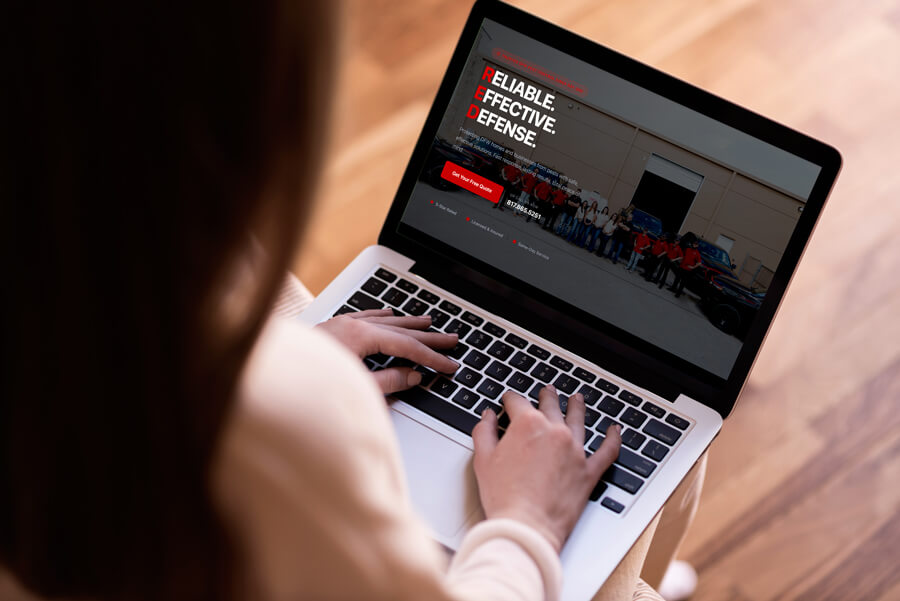
We redesigned Red Pest Control’s website from the ground up. The result? Clear navigation, strategic CTAs, trust signals everywhere, and visitors who actually convert. Here’s what worked—and how you can apply these principles to your own site.
The Problem: Pretty Websites That Don't Sell
Service businesses face a specific problem. Your customers are usually in crisis—they need their plumbing fixed, their roof inspected, and their pest problem solved today. They’re not browsing casually. They’re searching urgently.
Yet most service-business websites treat visitors as if they have time to waste.
Common mistakes:
- A generic design that could be any business. No clear differentiation. No personality. Visitors can’t tell why you’re the answer.
- Vague CTAs. “Learn More” or “Contact Us” doesn’t convey urgency. A homeowner needs their termite problem solved, not a generic form submission.
- Missing trust signals. No reviews, ratings, certifications, or guarantees visible above the fold. Visitors don’t know if you’re legit.
- Poor navigation. Visitors can’t quickly find the service they need. They’re confused, so they bounce to a competitor.
- No mobile optimization. Field service customers search on their phones. If your site’s slow or hard to use on mobile, you’ve lost them.
- Unclear next steps. Multiple pages, unclear paths, no obvious “what do I do now?” messaging.
The difference between a portfolio site and a sales tool is everything. A portfolio shows your work. A sales tool moves people through the funnel.
What Actually Works: The Red Pest Control Case Study
When Red Pest Control came to us, their website had the problems above. It looked fine, but it wasn’t built for conversion. Visitors didn’t know what services they offered, how fast they could respond, or why Red was different.
Here’s what we did:
1. Clear Service Categories & Self-Selection
We organized all services: from general pest control to termite protection, rodent removal, mosquito control, and specialty treatments, into two clear paths: Residential and Commercial. Visitors could immediately find what they needed. No hunting. No confusion. If you need pest control for your home, you see that option first. If you’re commercial, there’s a clear path for you, too.
This reduced bounce rate by clarifying intent instantly.
2. Trust Signals Above the Fold
We placed the three most critical trust signals at the top of every key page. Visitors needed to know:
- Red Pest Control is licensed and insured.
- Real customers trust them (5-Star Rated).
- Response is fast—same-day available.
These signals take 3 seconds to scan, and they answer the question: “Can I trust this company?”
3. Multiple Strategic CTAs
Not everyone converts the same way. Some want to call. Some want to request a quote online. We placed CTAs strategically:
- Header & footer: Phone number (big, clickable on mobile).
- Primary conversion point: “Get Your Free Quote” form.
- Customer portal: Link for existing clients to manage their service.
Each CTA matched the visitor’s likely intent at that moment.
4. Mobile-First Design
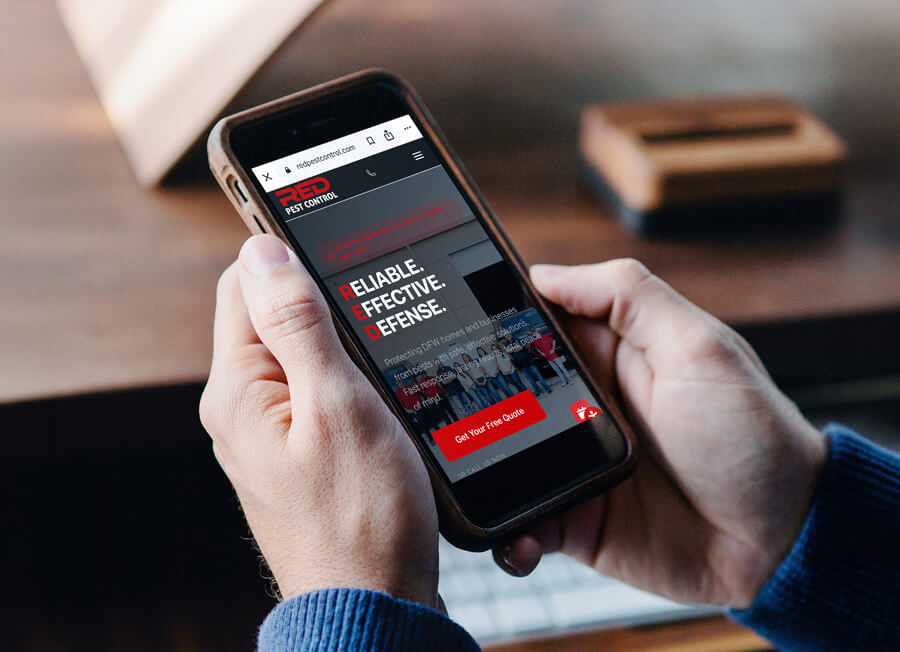
Field service customers search on phones. We designed mobile first, then enhanced for desktop. The site loads fast, tap targets are thumb-friendly, and the call button is always accessible. On mobile, one tap calls Red Pest Control directly.
5. Local Relevance & Service Area Clarity
We listed Red Pest’s service areas prominently: Fort Worth, Dallas, Arlington, Irving, Plano, Frisco, McKinney, Denton, Grand Prairie, and more. Visitors in specific neighborhoods saw local context immediately. This builds trust faster than generic language. We emphasized “Trusted DFW Pest Control” to reinforce a sense of community.
The result? Visitors know that Red Pest Control serves them, is trustworthy, and can help quickly.
The Design Principles Every Service Business Needs
Red Pest Control case study reveals three universal principles for converting service websites:
Clarity Beats Aesthetics
Your website doesn’t need to win design awards. It needs to answer three questions in 10 seconds:
- What do you do?
- How fast can you help?
- How do I get started?
If visitors can’t answer these quickly, they’re gone. Clarity—not fancy—is what converts.

Mobile-First Isn’t Optional
Over 60% of searches for local service businesses occur on mobile devices. If your site isn’t built mobile-first, you’re losing more than half your potential customers. It’s not a design trend—it’s survival.
Local Relevance Converts
Service customers search locally. “Pest control near me.” “Plumber in Fort Worth.” Your website needs to speak to the specific areas you serve, use local language, and show you’re part of the community. Generic language fails.
Remove Friction at Every Step
Every page should reduce friction. That means:
- Fast load times.
- No hidden contact info.
- Forms that don’t ask for unnecessary data.
- Phone numbers visible everywhere.
- Trust signals on every key page.
- Simple navigation.
Friction = bounces. Conversion sites remove it obsessively.
Your CTA Should Match Your Customer’s Urgency
A homeowner with an active pest problem isn’t thinking “Learn More.” They want to know: “Can you come today?” Red Pest understood this; they placed “Get Your Free Quote,” their phone number, and a customer portal strategically, rather than generic CTAs. The result? Multiple conversion paths that matched different visitor intents.
The Bottom Line: Conversion Is a Strategy, Not an Accident
Your site can too.
Ready to Audit Your Website?
Most service businesses leave money on the table with poorly converting websites. Want to know where you stand?
Quick self-audit checklist:
- ✓ Can a first-time visitor answer “What do you do?” in 5 seconds?
- ✓ Is your phone number visible and clickable above the fold?
- ✓ Do you show reviews, ratings, certifications, or guarantees?
- ✓ Is your site fast and easy on mobile?
- ✓ Are your CTAs clear and urgent (not generic)?
- ✓ Do you have service area clarity (local, specific, real)?
If you answered “no” to any of these, you’re likely losing customers to competitors who build for conversion.
Let’s talk about your website. Contact Amplus to discuss your site’s conversion potential.
Your website should be a sales tool, not a brochure. Let’s build it that way.
Ready to Build a Conversion-Focused Website?
Amplus specializes in high-performing websites for service businesses. Let’s talk about your site and show you what’s possible.